Chronic wasting disease (CWD) continues to spread across North America, affecting deer, elk, moose and reindeer populations in both captive and free-ranging herds. With no vaccine, no cure and a fatality rate of 100%, CWD is widely regarded as one of the most significant cervid diseases in the world. Below, we cover what CWD is, how it spreads, where it has been detected and what it means for the UK.
What is Chronic Wasting Disease?
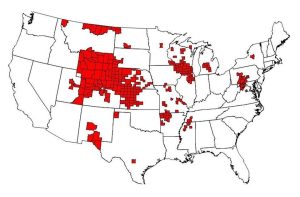
Chronic wasting disease is a fatal neurodegenerative disease caused by prions, which are infectious proteins that cause normal cellular prion proteins to misfold. CWD affects cervids such as white-tailed deer, mule deer, black-tailed deer, elk, moose and reindeer. It was first reported among captive mule deer and black-tailed deer at research facilities in Colorado and Wyoming in the late 1960s and has since spread steadily across the continent.
The disease is always fatal, and there are currently no treatments or vaccines available. Infected animals can remain subclinical for months or even years before showing symptoms, shedding infectious prions throughout that period. This prolonged incubation makes CWD extremely difficult to detect and control.
How Does CWD Spread?
Transmission occurs through direct contact with infected animals or indirectly through a contaminated environment, most likely via the oral route. Infected cervids shed prions in saliva, urine, faeces and blood. When infected carcasses decompose, they release prions into surrounding soil and vegetation, where they can remain infectious for at least two years.
The minimum number of CWD prions required to cause infection appears to be very low, and diagnosis usually relies on post-mortem testing, which may fail to identify animals during the early stages of infection. These characteristics, combined with the environmental persistence of prions, make containment extremely challenging.
Where Has CWD Been Detected?
As of 2026, CWD has been detected in captive or free-ranging cervids across 36 US states and five Canadian provinces, as well as in South Korea, Norway, Finland and Sweden. The geographic expansion in North America is thought to reflect both the commercial movement of subclinical animals and natural cervid migration. Epidemiological data suggest the disease spread from the USA to Canada and then to South Korea through imports of infected cervids.
While the spread is often described as rapid, it has been suggested that widening surveillance, rather than real-time geographic expansion, may account for much of the increase in reported cases. Field and modelling data indicate it may take 15 to 20 years for CWD prevalence to reach 1% in free-ranging populations. In captive herds, however, prevalence can eventually reach 100%.
What Are the Signs of CWD in Animals?
CWD can infect cervids of all ages, though most clinical cases are observed in animals between two and seven years old, particularly males. Symptoms include drastic weight loss, stumbling or lack of coordination, drooling, listlessness, excessive thirst or urination, drooping ears and a lack of fear of people.
Diagnosing CWD based on symptoms alone is difficult, as many overlap with other diseases or general malnutrition. Wildlife agencies rely primarily on voluntary testing of hunted deer carcasses using post-mortem ELISA or immunohistochemistry methods.
Can CWD Spread to Other Species?
Recent research has raised questions about whether CWD can cross species barriers, with studies examining both wild pigs and primates.
Wild Pigs in North America
A 2025 study investigated CWD prion exposure in wild pigs living in CWD-affected areas of Arkansas and Texas. Researchers analysed over 300 brain and lymph node samples from 178 wild pigs and detected CWD prions in up to 37% of lymph node samples and 15% of brain samples. None of the animals displayed clinical signs of disease, and transmission studies in mice suggested the prion levels were too low to cause infection through pig prion protein. However, wild pigs could still contribute to CWD transmission through their considerable home ranges, potentially complicating control efforts.
Research on Primates
In laboratory settings, CWD has been shown to infect squirrel monkeys and mice carrying some human genes. A study by Canadian and German scientists found that CWD spread to macaques that consumed infected meat or brain tissue, though this contradicted earlier research showing no transmission. To date, there is no strong evidence that CWD infects people, but these findings underscore the need for continued caution and further research.
What Are the Implications for the UK?
CWD is a notifiable animal disease in Great Britain, but no cases have ever been reported. The introduction of CWD into the UK cervid population could have devastating consequences. The UK venison market alone is worth an estimated £100 million, and the socio-economic impact on cervid farming, hunting and rural tourism could be severe.
To reduce the risk of introduction, Great Britain suspended the import of live cervids and high-risk cervid products from all CWD-affected countries in June 2023. Fresh cervid meat, excluding offal and spinal cord, can only be imported if it tests negative for CWD and originates from an area free of reported cases for at least three years.
The current risk of CWD being introduced into Great Britain’s cervid or wild pig population is assessed as ranging from very low to negligible. Detection of CWD prions in US wild pigs is unlikely to change this assessment, as the USA is not approved to export live wild pigs to Great Britain and trade in wild pig meat between the two countries appears extremely limited.
How Is CWD Being Controlled?
Control strategies in North America fall into three categories:
- Prevention
- Containment
- Suppression
Prevention and containment focus on restricting the movement of live cervids, carcasses and specified risk materials. Suppression involves measures such as selective or random culling to reduce infection rates.
Despite these efforts, CWD has continued to spread, with eradication from North America now considered infeasible due to the extent of geographic spread and the environmental persistence of prions. Inappropriate disposal of deer carcasses and slaughter by-products remains one of at least 13 identified risk factors contributing to further spread.
Responsible Carcass Disposal with Inciner8
Inciner8 has been manufacturing incineration systems for over 20 years, with installations in more than 190+ countries – from medical facilities and agricultural operations to mining sites, remote camps, and island nations. Our UK-built systems are engineered to meet the demands of each environment, combining reliable performance with compliance to international emissions and environmental standards. We’re with you long after installation.
Our team provides operator training, technical support, spare parts manufactured to original specifications, and ongoing guidance throughout the lifetime of your equipment – wherever in the world your operation is based. To find out more about our range of DEFRA-approved agricultural incinerators, or to discuss the right solution for your site, contact Inciner8 today.